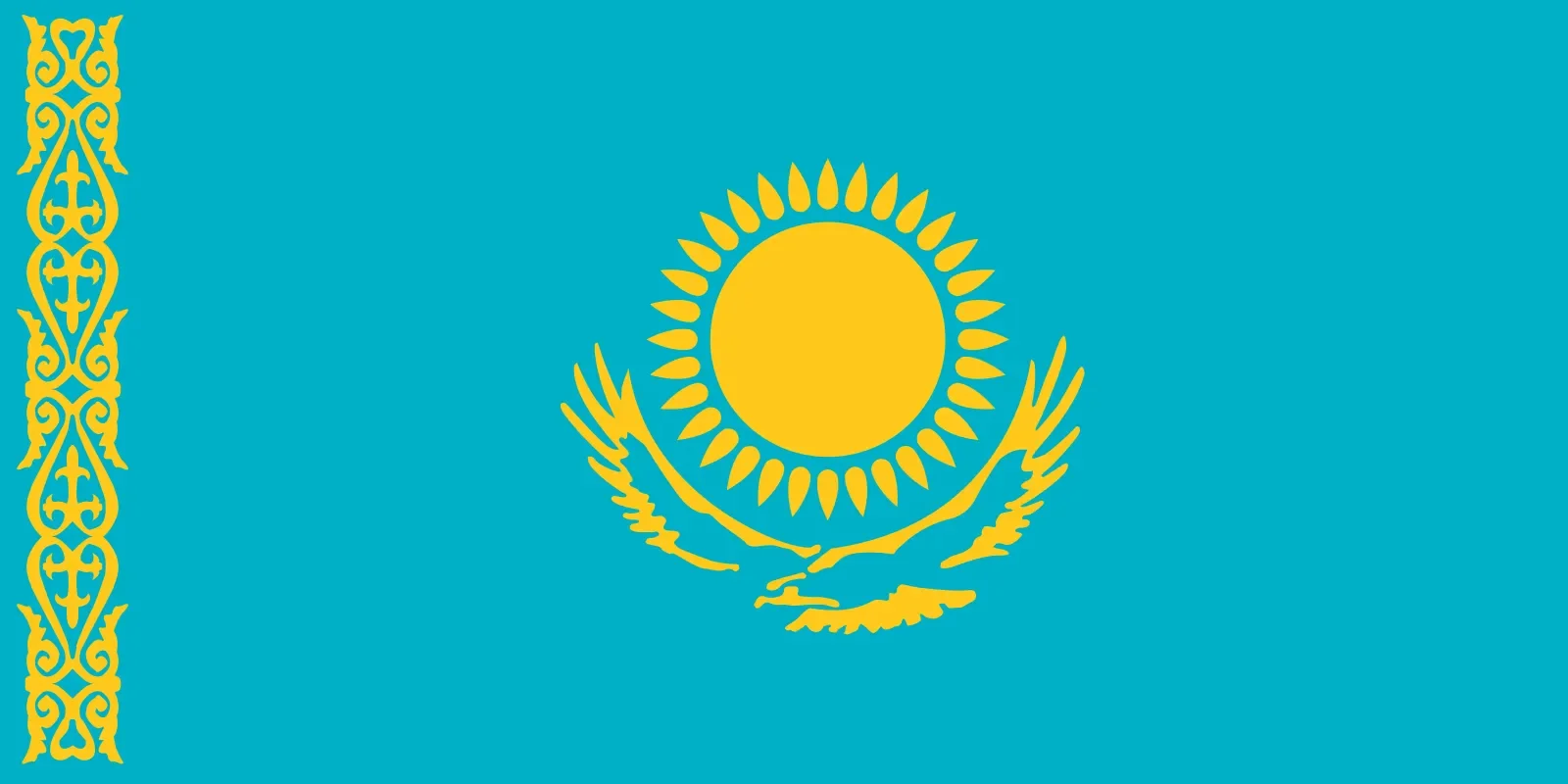
Welcome!
Qoş keldiŋiz!
Добро пожаловать!
Kazakhstan is rapidly expanding in global focus; from the beautiful steppe and strong nomadic history to a growing modern economy and tourism sector, everyone wants to know what Central Asia is all about.
Women are central to Kazakh identity, but their stories are often difficult to find online. Here, you can learn more about how women in Kazakhstan balance tradition, modernity, and leadership through feminist-focused oral history interviews.
If you are completely new to the region, scroll down to learn a little bit about Kazakhstan, including geography, history, and culture!
Thank you for taking the time to learn more about Kazakhstan and women’s leadership, and for supporting my Social Action Project!
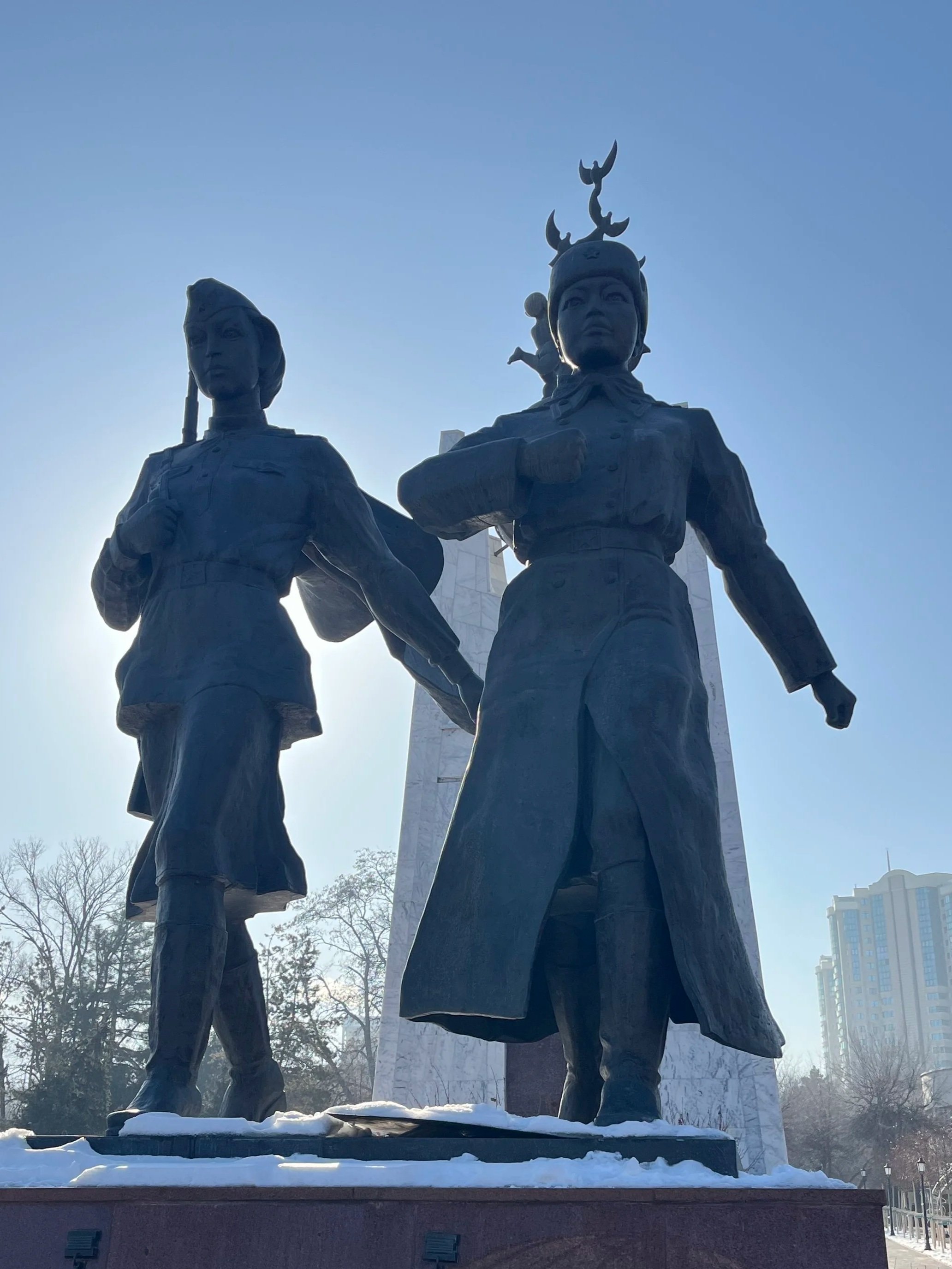
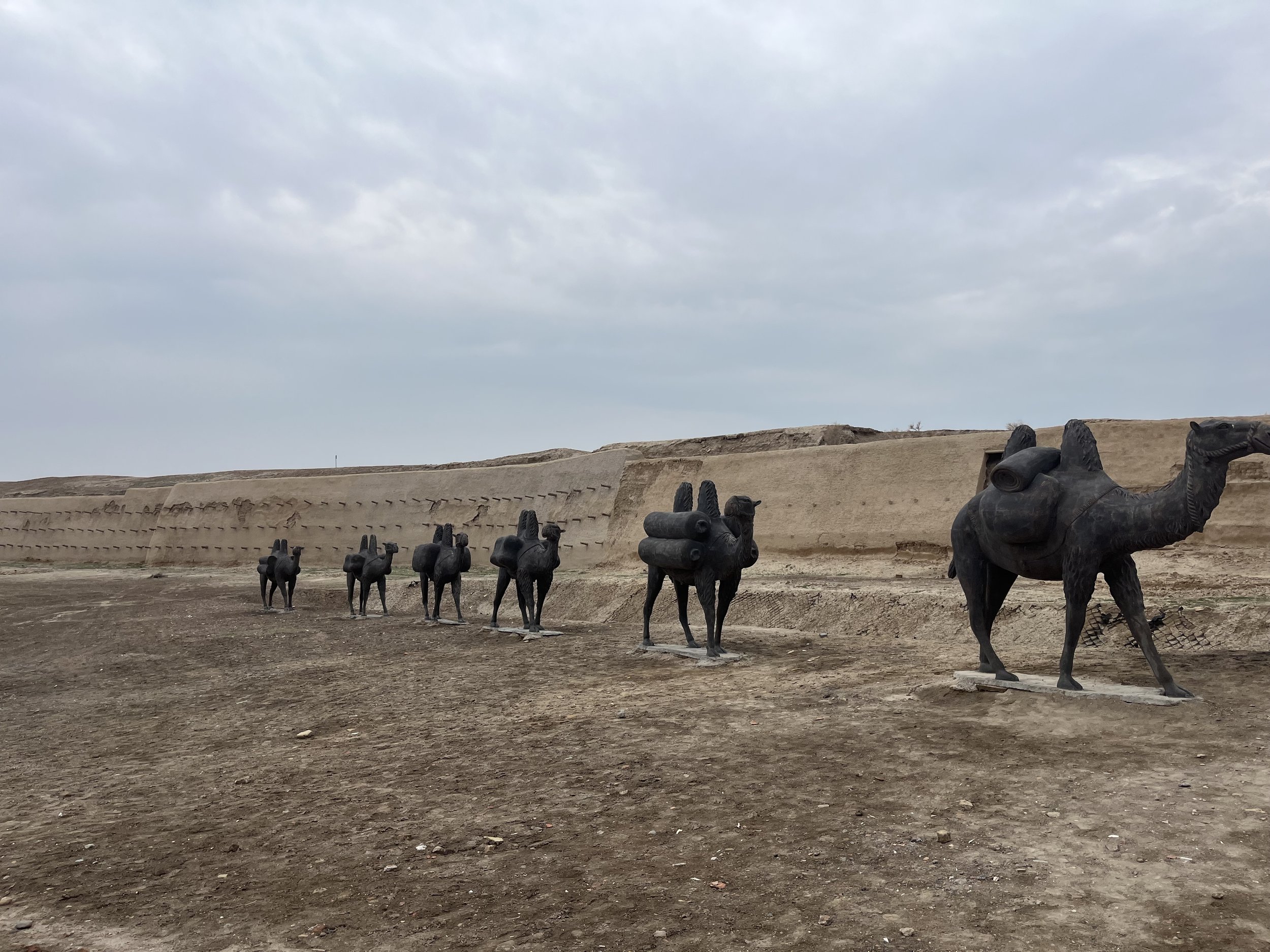
The fortification wall of the ancient city of Otrar, including a metal camel caravan!
Project Overview
In this Social Action Project, I interviewed two women who currently live in Kazakhstan: Asem Aksholakova, a Professor and Head of the Department of Foreign Philology and Translation Studies at a university in Almaty, and Aizura Anteeva, a student and Assistant Director of the American Councils RLASP program. The interviews followed an oral history framework where I sought to document each woman’s lived experience as a woman in Kazakhstan and understand their leadership through a feminist framework. Each interview was 45 minutes long and conducted on Whatsapp, during which the audio was recorded. The interviews were conducted in Russian, then transcribed and translated into English using Sonix.ai, after which I made edits.
DISCLAIMER: The words written in this website are translated from Russian as directly as possible, and I have attempted to maintain the tone of each interviewee. However, because they are translations, please use discretion when reading!
If you are interested in reading the direct Russian transcripts, please contact me through the form in the About Me tab.
The intention of this project is to educate on Kazakhstan as a historical and cultural entity, and explore what it means to be a woman in Kazakhstan today. Documentation of oral history is an essential part of feminist leadership; learning from the lived experiences of women is how we build a better future for everyone.
A Little Bit About Kazakhstan
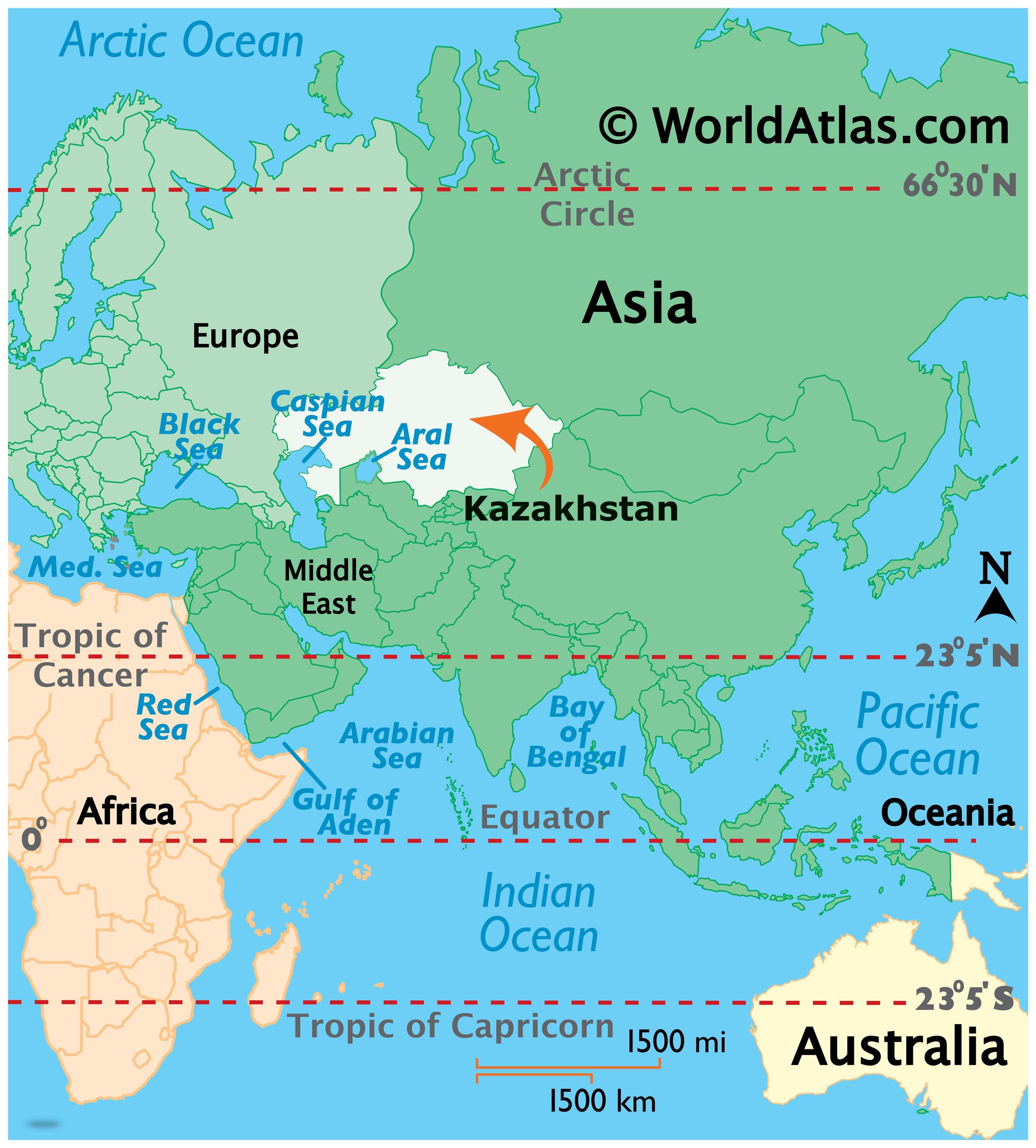
Image Source: https://www.worldatlas.com/maps/kazakhstan
The Republic of Kazakhstan is located in Central Asia.
It is bordered by Russia, China, Kyrgyzstan, Uzbekistan, and Turkmenistan.
Kazakhstan was colonized by the Russian Empire in the 18th and 19th century, and stood as an autonomous republic (Kazakh Soviet Socialist Republic, KSSR), during the reign of the Soviet Union.
Kazakhstan declared its independence on December 16, 1991, after the collapse of the Soviet Union. It is now the Republic of Kazakhstan (Qazaqstan Respublikasy).
Today, Kazakhstan is a bilingual country. While Kazakh is the official state language, a majority of residents speak both Kazakh and Russian, and both can be heard on the street.
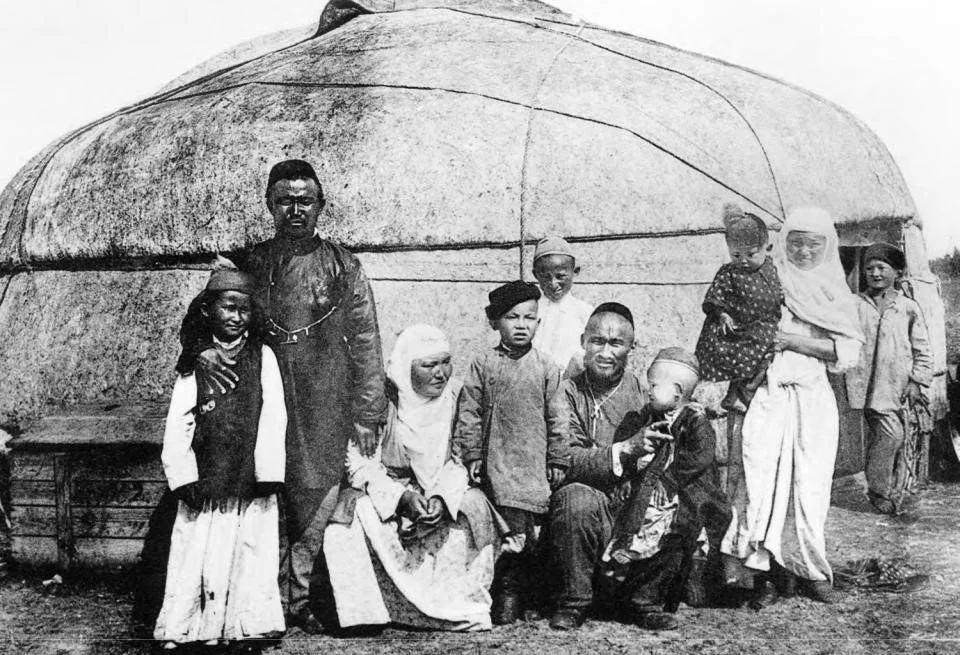
Image Source: https://e-history.kz/en/news/show/50001640
The Kazakhs are an ethnically Turkic people that are though to have originated from the Altai mountain region of modern Mongolia. They were historically nomadic and expanded through Central Asia.
The Islamic conquests of the 7th and 8th Century brought Islam to the Kazakh people, along with architecture, language, and culture that still lives on today.
As pastoral nomads, Kazakhs lived in yurts, which are dome-shaped tents made of wood and felt and are easily transportable. Kazakhs focused primarily on raising livestock instead of agriculture, and the portable yurts helped them migrate seasonally, following pasturage for their animals.
Horses are essential to Kazakh identity; they were used as transportation, food, and material for clothes and tools. Most Kazakh food focuses on meat and milk products. They also raised sheep, goats, cattle, and camels.
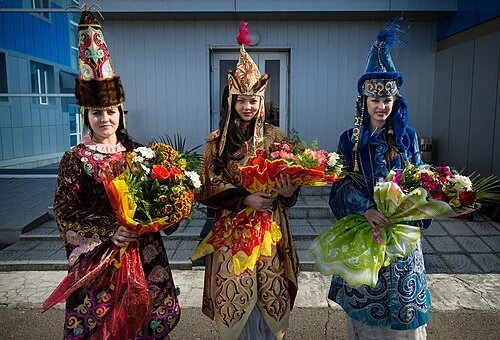
Image Source: https://en.wikipedia.org/wiki/Women_in_KazakhstanFamily is the center of Kazakh culture. Families traveled and camped together in large groups, and extended family, including a parents, unmarried children, and a son’s family, would all live together.
Historically, Kazakh family roles were built around mutual dependency in a labor-intensive nomadic lifestyle. Kazakh men were often out raising livestock or in battle, while women tended to the home. This included taking care of the family but also setting up the yurts, driving carts, and loading camels.
Women in Kazakhstan have always been taught to be strong and caring. There have been countless Kazakh women in leadership positions, and today that trend is especially seen in higher education.
If you are interested in learning more about Kazakh women in history, check out these articles with the Astana Times and The Times of Central Asia.
Sources
Check the Acknowledgements for full citations and more reading material!